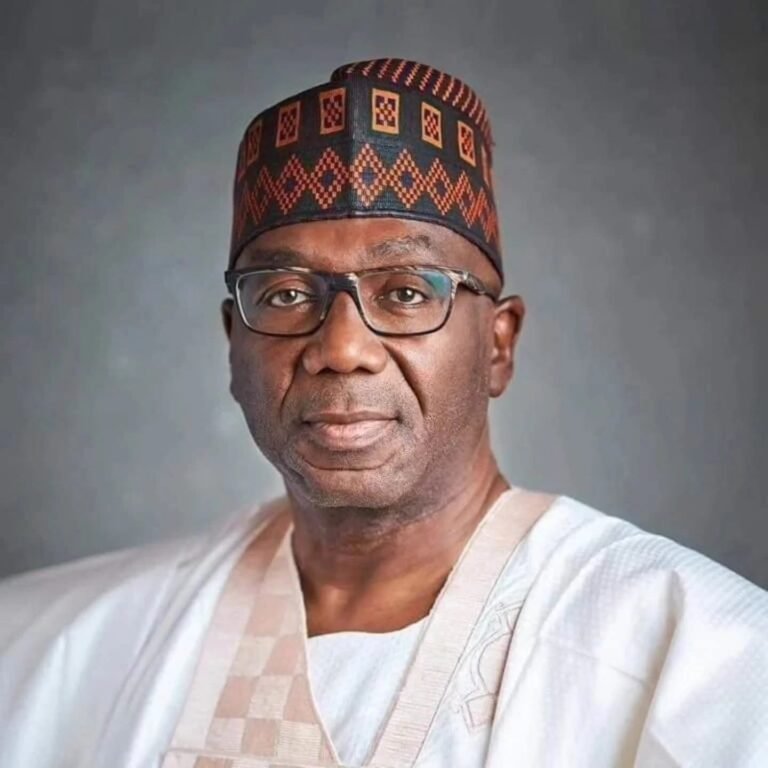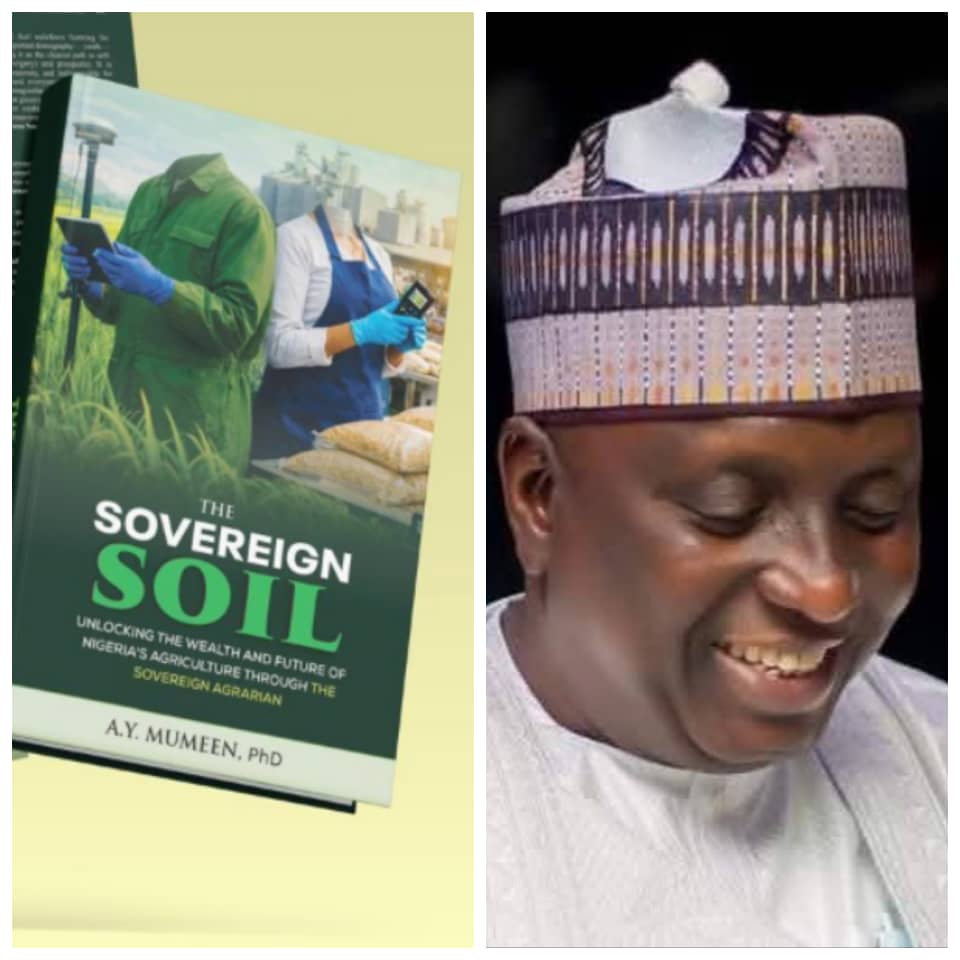
Former Senator representing Kwara Central and Chairman of the Governing Council of the National Health Insurance Authority (NHIA), Ibrahim Yahaya Oloriegbe, has described The Sovereign Soil: Unlocking the Wealth and Future of Nigeria’s Agriculture through the Sovereign Agrarian by A.Y. Mumeen as one of the most important and practical agricultural policy books produced in Nigeria in recent years.
In a detailed review of the book, Senator Oloriegbe praised the work for presenting an evidence-based and institutionally grounded framework for transforming Nigeria’s agricultural sector through what the author terms the “Sovereign Agrarian” model.
According to him, the book advances a compelling argument that true agricultural sovereignty is not merely about land ownership, but about “the capacity of a generation to own, interpret, and deploy the knowledge systems that govern what a nation grows, processes, exports, and ultimately eats.”
The former lawmaker noted that the book accurately diagnoses Nigeria’s agricultural crisis as a problem of systemic misalignment rather than resource absence. He highlighted the author’s use of critical data, including findings that senior academic researchers in Nigeria earn roughly $400 monthly in real terms, while nearly 76 percent of Nigerian farmers fall between the ages of 44 and 72.
He explained that these realities expose a deep economic and generational crisis threatening Nigeria’s food security future.
Oloriegbe particularly commended the book’s critique of the “White-Collar Myth,” describing it as a structural challenge that has disconnected educated Nigerian youths from productive engagement in agriculture.
On political economy, the former senator applauded the author’s call for season-sensitive agricultural budgeting, arguing that agricultural institutions should be funded according to biological and climatic realities rather than rigid fiscal cycles designed for industrial systems.
He described the proposal as a sophisticated and long-overdue reform capable of improving food security governance in Nigeria.
The review also emphasized the book’s strong focus on youth development and identity formation. Oloriegbe praised the concept of “mental pedology,” which advocates cultivating positive perceptions about agriculture among children before societal bias discourages participation in the sector.
He highlighted the Kwara Young Farmers Club initiative discussed in the book, noting that its emphasis on precision agriculture, satellite imagery, digital tools, and data interpretation offers a modern and aspirational pathway for young Nigerians.
The senator further identified the “Solution Entrepreneur” concept as one of the book’s most politically practical contributions to the youth employment debate. According to him, the framework creates opportunities for educated urban youths to participate in agriculture as drone operators, agro-data analysts, fintech compliance specialists, and digital content producers without necessarily owning farmland or relocating to rural communities.
He also praised the proposed partnership model between young agrarian entrepreneurs and research institutes, describing it as an innovative, low-cost solution capable of addressing youth unemployment, research communication gaps, and digital misinformation simultaneously.
Beyond agriculture, Oloriegbe stressed that the book carries major public health implications. He argued that Nigeria’s aging farming population poses not only a food production challenge but also a nutrition security threat capable of worsening malnutrition, food inflation, and diet-related diseases among vulnerable populations.
The NHIA chairman also drew attention to the book’s discussion on aflatoxin contamination in maize and groundnut, noting that the issue extends beyond export rejection to a serious domestic public health concern linked to liver cancer, immune suppression, and childhood nutritional deficiencies.
He stated that the Sustainable Agronomic Practices framework proposed in the book should be viewed not only as a trade competitiveness strategy but also as a critical food safety and public health intervention.
While commending the book extensively, Oloriegbe noted that future editions could further explore structural reforms necessary to broaden access to agricultural opportunities for young Nigerians, especially women and individuals in underserved communities lacking access to digital infrastructure, financing, and land.
He concluded by describing The Sovereign Soil as a “serious, evidence-grounded, and genuinely original contribution” to Nigeria’s agricultural and development policy discourse.
According to him, the book demonstrates that food sovereignty and public health are deeply interconnected and should be treated as parts of the same national emergency.
He recommended the publication to legislators, ministries, development agencies, universities, public health institutions, and Nigerian youths seeking practical pathways into the agricultural value chain.