By A.Y. Mumeen- Bioye, PhD
There is a question I have heard, directly and indirectly, many times in recent years, that question became louder in the days ahead of the launch of my book, The Sovereign Soil. The question is: Do people still read books?
In an age dominated by short videos, social media posts, podcasts, reels, instant messaging and increasingly compressed attention spans, it is easy to conclude that books have lost some of their power to influence people.
My experience after publishing The Sovereign Soil has given me a different answer. People still read. More importantly, the right people still read.
Sometimes, a book does not produce its most important result through a book launch, a review, a newspaper mention or even immediate sales. Sometimes, the most consequential return from a book begins when an idea reaches the desk of someone who has the institutional authority to act on it. That is what happened to me.
A Book Is Never Written Alone
Before telling the story of what happened after the launch, I must acknowledge that The Sovereign Soil was never entirely a solitary achievement. The intellectual responsibility of authorship was mine, but the journey of the book was enriched by people who read it critically, challenged its arguments, strengthened its presentation and helped bring it before the public.
My sincere appreciation once more, therefore goes to the book’s reviewers: Dr. Monisoye Sola Afolabi, former Deputy Executive Secretary of ECOWAS; Senator Ibrahim Yahaya Oloriegbe, member of the Nigeria’s 9th Senate; Barrister Victoria Oluwatoyin Opaleke, UK Based legal practitioner; and Dr. Rafiu Ajakaye, former CPS to the governor of Kwara State. Their intellectual engagement with the manuscript contributed significantly to the final work. I also remain deeply grateful to the members of the book’s Launch Committee, led by Mr. Bolaji Aladie and Dr. Mosadi Ayinde, whose commitment helped transform an idea on paper into a public event. I must also acknowledge Pressman Oyewale, whose role in the publicity and media dimension of the project contributed to giving the book the visibility it deserved. And then there were the people who came. The dignitaries, colleagues, friends, family members, academics, policymakers, traditional leaders, public officials and other guests who attended the launch gave the occasion a significance that went far beyond the unveiling of a book. I remain grateful to everyone who contributed financially and otherwise to the launch and to those who purchased copies, made donations and encouraged the project.
Among those who offered useful counsel was Barrister Ahmed Akanbi. After learning that, despite the well attended launch, I still had more than 350 copies unsold out of the initial 500 copies , he gave me a simple but important piece of advice. He suggested that I should consider giving complimentary copies to people who needed to read the book. That advice became the beginning of another chapter.
The Decision to Give the Book Away
Barely a week after the public launch of The Sovereign Soil, I made what some people around me considered a rather bold decision. I decided to send complimentary copies of the book to 55 notable Nigerians, including three ministers and 23 heads of federal government ministries, departments and agencies. It was not a conventional sales strategy. Sincerely, I was not even expecting immediate financial returns from the exercise. I was interested in something else: access to readers who could understand, interrogate or potentially act upon the ideas contained in the book.
Each dispatched envelope contained three things. First was a complimentary copy of The Sovereign Soil. Second was a covering letter written on my personal letterhead, explaining the reason for sending the book and placing the publication in the context of my work as an agricultural research scientist and advocate of a more productive approach to agriculture and national development. Third was my complimentary card, so that any recipient who wished to contact me could do so easily.
I deliberately treated the exercise as more than book distribution.
It was an intellectual outreach strategy. I was effectively saying: Here is an idea I have developed, and you occupy a position from which some part of this idea may become useful. Please read it.
I could not have known what would follow.
When Readers Began to Respond
The responses were encouraging.
Among those who personally called or otherwise reached out to appreciate the work were the Honourable Minister of Agriculture and Food Security, Senator Abubakar Kyari; the Director General of the Nigerian Institute of Policy and Strategic Studies, Kuru, Jos, Professor Ayo Omatayo; and the Executive Secretary of the Agricultural Research Council of Nigeria, Dr. Abubakar Adamu Dabban. The response from ARCN particularly touched me. Dr. Dabban went beyond a personal acknowledgement and caused the letter to be published in the ARCN monthly journal.
I also received acknowledgement from distinguished Nigerians including His Excellency Dr. Abubakar Bukola Saraki, President of Nigeria’s 8th Senate, His Excellency Elder Kayode Alabi, the Deputy Governor of my state, the Ooni of Ife, His Imperial Majesty Oba Adeyeye Enitan Ogunwusi, and the Vice Chancellor of Federal University of Agriculture, Abeokuta, Professor O.B. Kehinde. Each response reinforced one important lesson: The book had travelled beyond the launch venue. But one response would change the direction of my professional journey in a way I could not have anticipated. That response came from Engr. Felix Omatsola Ogbe, the Executive Secretary of the Nigerian Content Development and Monitoring Board, NCDMB.
From Complimentary Copy to Working Courtesy Visit
Rather than simply acknowledge receipt of the book, Engr. Ogbe invited me for a working courtesy visit.
That invitation became one of the most consequential outcomes of the entire book distribution exercise. When I met him, he commended the work and told me that one particular chapter had resonated strongly with him. It was Chapter One: “The Myth of the White Collar.” In that chapter, I had challenged the deeply embedded Nigerian assumption that the white-collar pathway represents the highest expression of education, prestige, income and success. My argument was not against university education or professional careers. It was against the artificial hierarchy that places some forms of productive work above others.
Nigeria needs doctors and plumbers. Professors and welders.
Engineers and fabricators.
Researchers and technicians.
Teachers and builders.
Economists and electricians.
The question, I argued, should not be which category of productive work is superior. The question should be whether our economy provides every productive capability with a pathway to dignity, income, enterprise, value-chain participation and wealth creation. Engr. Ogbe told me that this argument resonated deeply with the mandate of the organisation he leads. But he did something else: He challenged me.
“Why Agriculture Alone?” In our conversation, he questioned why I had largely framed my argument around agriculture when the underlying thesis was actually much broader. Why restrict the argument to agriculture when Nigeria has an enormous range of technical and vocational capabilities waiting to be developed? That question forced me to look beyond the boundaries of my own professional comfort zone. As an agricultural research scientist, agriculture had naturally been my primary lens. My first book was deliberately constructed around that lens. But the NCDMB perspective introduced another dimension. Nigeria’s productivity challenge was not confined to agriculture. It extended into energy, construction, manufacturing, fabrication, technical services, housing, facilities management, electricity metering, plumbing, communications and numerous other sectors. Engr. Ogbe explained that, as part of NCDMB’s efforts to enforce and deepen Nigerian content across the economy, the organisation had increasingly invested in training young Nigerians in blue-collar and technically oriented vocational skills. The objective was larger than merely giving young people certificates. It was about developing Nigerians capable of occupying economic spaces that might otherwise be filled by foreign technical personnel.
That was where he saw a direct connection between my argument in The Sovereign Soil and the work of NCDMB.
I had written about changing the mindset around work. He was implementing an institutional mandate that required precisely that kind of change in economic participation.
The book had found an institutional reader. And the institutional reader found a practical application for the idea.
The Unexpected Appointment
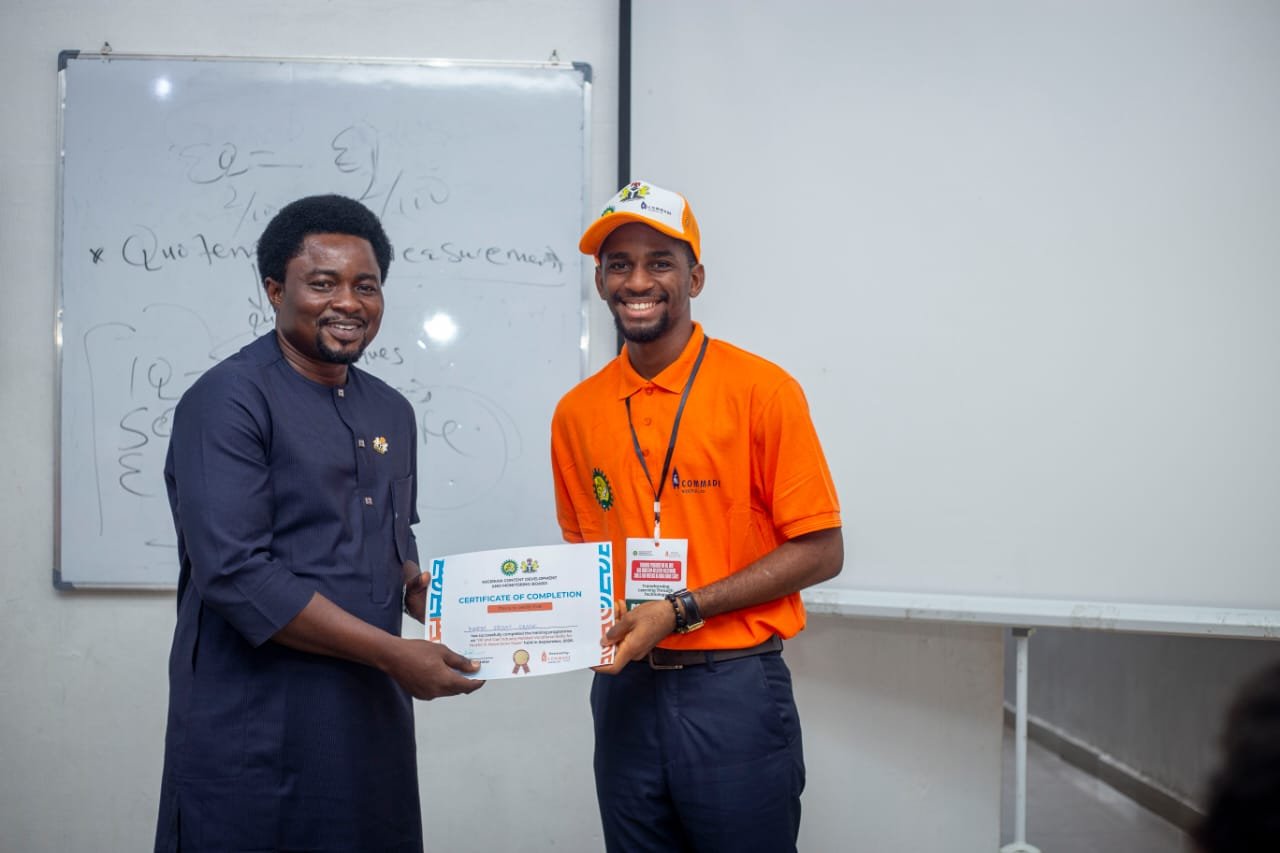
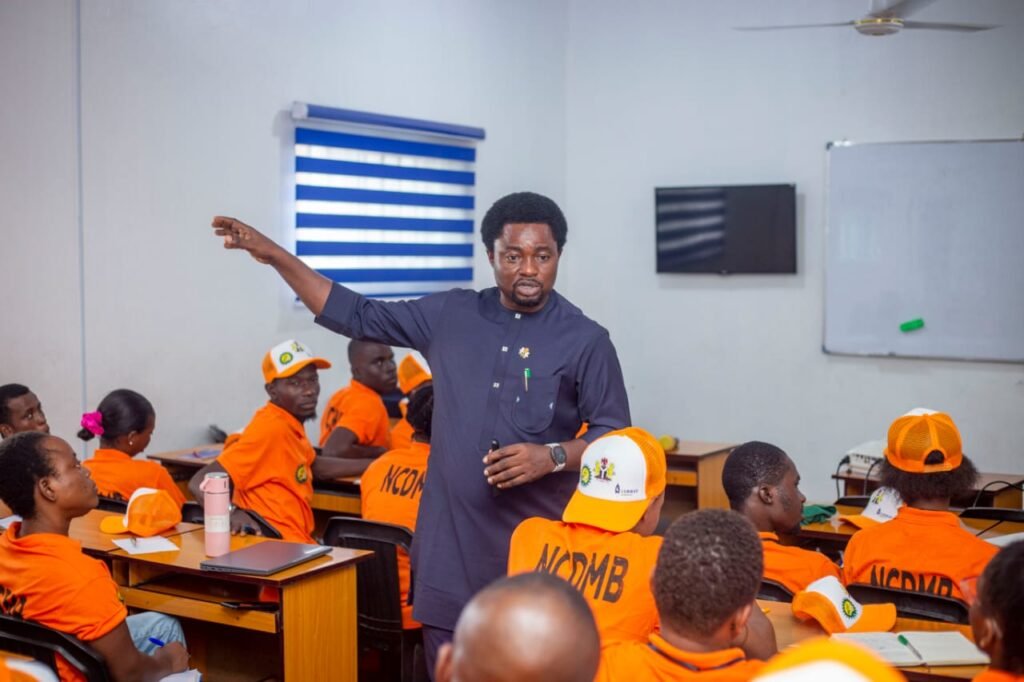
During that meeting, Engr. Ogbe instructed the relevant Director to attach me as a Lead Facilitator to contractors implementing some of the Board’s youth training and empowerment programmes. What followed was beyond what I had imagined when I placed that complimentary copy in an envelope.
I was subsequently attached to eight different contractors. My responsibilities went considerably beyond standing before a classroom and delivering lectures. I became involved in:
curriculum development;
breaking the ice and opening training programmes;
preparation of modular presentations;
sourcing and assigning resource persons;
academic coordination;
training materials;
programme administration;
assessment;
certification;
and the general academic direction of the training faculty.
In effect, I was no longer simply a facilitator. I was helping to design and manage the intellectual architecture through which young Nigerians were being introduced to productive skills.
And Then Came the Geography:
Eight States, Many Economies
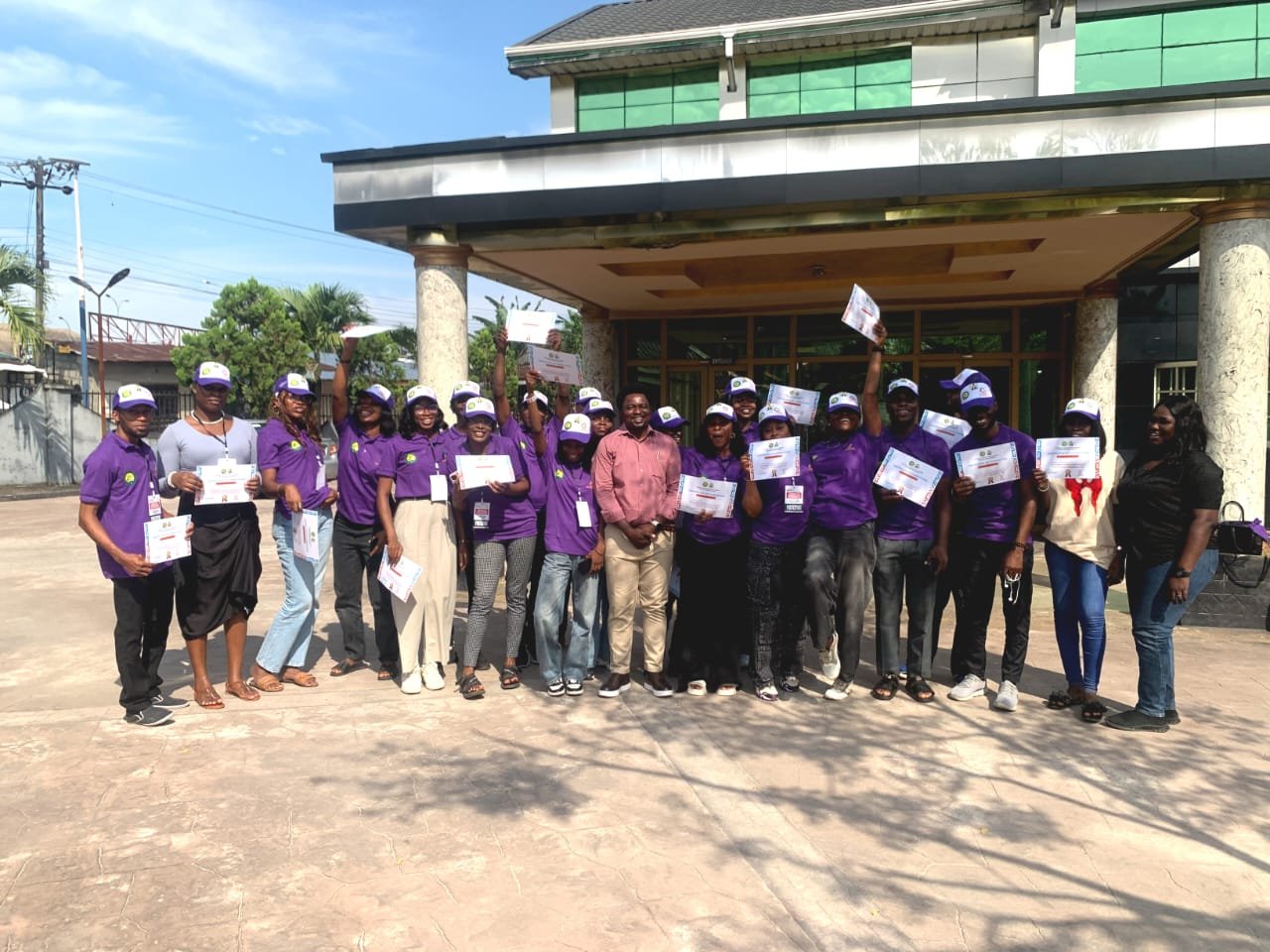
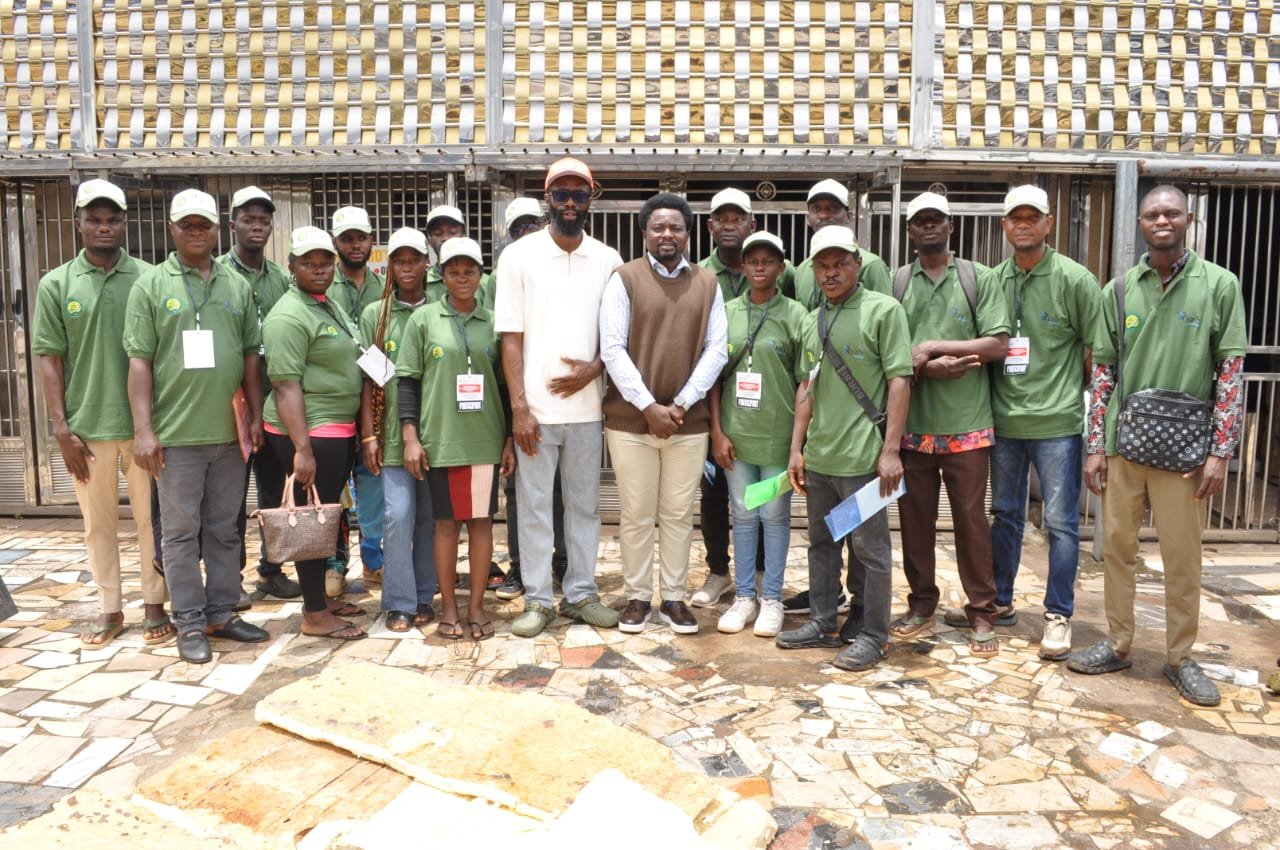
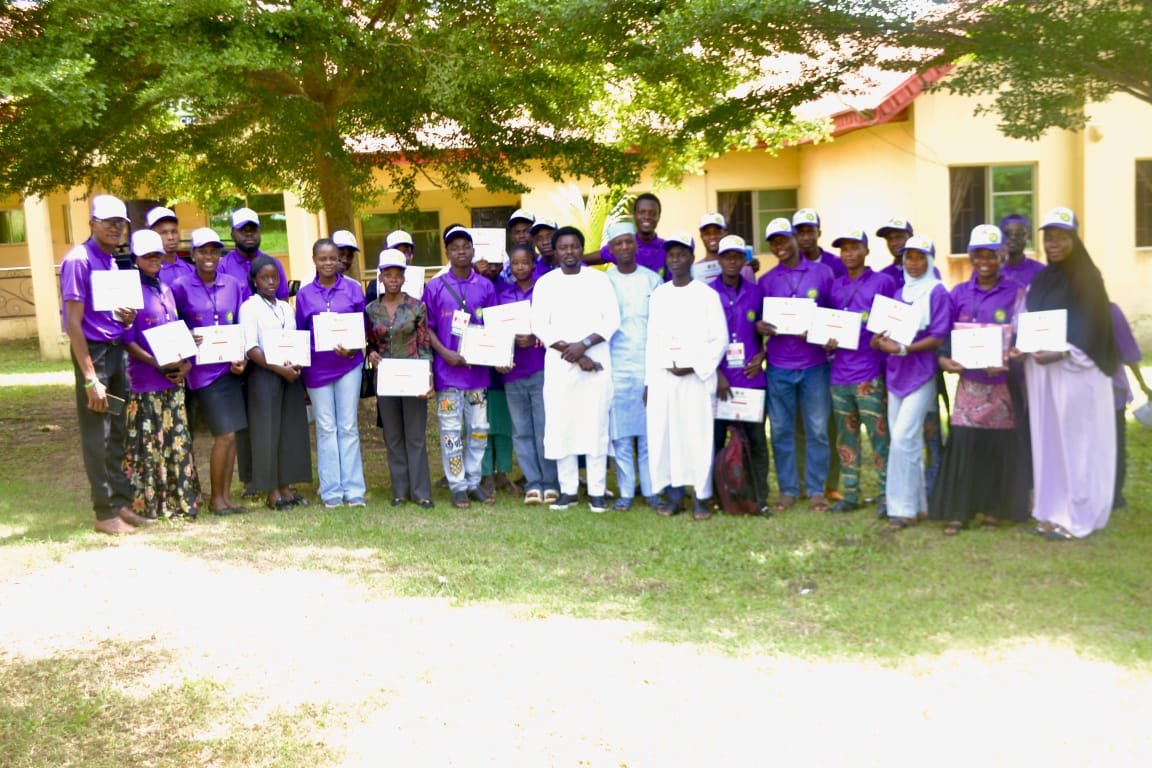
Within approximately three months, the assignment took me across different parts of Nigeria. It began in Offa, within my own state of origin, where we trained youths in event and facility management. Then came Abeokuta, Ogun State, where the focus was modular housing units. From there, I travelled to Ikeja, Lagos, for training around gas compression systems. We also did electricity meter repairs and house building communications at Gwagwalada, in FCT Abuja. We then moved to Calabar, Cross River State, for advanced plumbing systems. Then to Benin City, Edo State, for welding and fabrication. We proceeded to Port Harcourt, Rivers State, for oil and gas industry related vocational skills. Then to Uyo, Akwa Ibom State, for scaffolding and rigging systems. And eventually back to Ilorin, Kwara State, where we trained teachers on remote teaching systems.
The geography changed. The technical disciplines changed. The participants changed. But a pattern began to emerge. I was no longer seeing isolated occupations. I was seeing economies:
A plumbing economy.
A welding and fabrication economy.
A gas and energy services economy.
A housing production economy.
A facilities management economy.
A technical education economy.
An electricity and metering economy.
Each technical skill existed within a much larger ecosystem of suppliers, manufacturers, contractors, technicians, trainers, distributors, investors, consumers and entrepreneurs. That was when the idea of Nigeria’s Hidden Economies became much more real to me. They are not hidden because we cannot see the workers. They are hidden because we have not adequately recognized the economic systems surrounding their work.
The Classroom Became Another Classroom for Me
Perhaps the most interesting part of the experience was that I was not merely teaching. I was equally learning. As an agricultural research scientist, I had spent most of my professional life within the agricultural ecosystem. Research, crops, food science, extension, technology transfer and agricultural development were familiar territory. Suddenly, I was coordinating programmes involving gas compression,electricity metering and repairs, welding, fabrication, plumbing, scaffolding, rigging, modular construction, event management and remote teaching systems. I had indeed entered unfamiliar classrooms.
And I discovered that my doctoral training had prepared me for more than my specific discipline. A PhD does not make someone an automatic expert in every field. It would be intellectually dishonest to claim that but, serious doctoral training can develop something equally important: the capacity to learn, interrogate, synthesize, communicate and apply knowledge beyond one’s immediate disciplinary boundaries. That became particularly evident during the gas compression training in Lagos.
At the Portland Gas Workshop and Filling Station in Ojota, I delivered a substantial part of the theoretical component of the programme. I discussed fundamental principles of gas compression, including Boyle’s Law, and connected those principles to the practical understanding of gas compression systems.
I was teaching outside my conventional research discipline.
But I was not abandoning scientific rigour. I was applying it differently.
That distinction matters.
The Moment in Ojota
At the Portland facility, the Managing Director shared a story that stayed with me. He had relocated from the United States after recognizing the enormous opportunity emerging within Nigeria’s gas compression value chain.
He had returned because he saw a future here. He also expressed concern that the value chain still lacked sufficient numbers of skilled practitioners and participants to fully exploit its potential.
The opportunity, he said, was enormous. I kept thinking about that statement. Somewhere else in Nigeria, millions of graduates were preparing CVs, submitting applications and waiting for conventional employment.
Here was an emerging technical economy with room for entrepreneurs, technicians, operators, service providers and skilled professionals.
The contradiction was difficult to ignore. Perhaps Nigeria’s unemployment challenge is not only a shortage of jobs. Perhaps it is also a shortage of economic imagination.
The Moment in Benin
Benin City offered another powerful lesson.
At Moontales Structure Design in Edo State, I encountered an electrical engineering graduate of the University of Benin who had also become a creative writer and author of more than seventy books. Yet neither conventional engineering employment nor writing had produced the level of economic prosperity he desired. He then pivoted. He taught himself welding and fabrication. He entered structural design. He built competence. He built a business. He expanded his footprint across major construction and development projects in Edo State. He also diversified into oil palm production, allowing him to maintain productive activity during periods when the welding business was less active.
But perhaps the most striking part of his story was that he had trained a 54 year old lecturer from the University of Benin who wanted to migrate to Canada and believed that acquiring a technical skill could improve his economic survival. A university lecturer learning welding. That single story challenged several assumptions. It challenged the assumption that technical skills are only for young school leavers. It challenged the assumption that academic attainment represents the highest form of economic preparation. It challenged the assumption that technical work is inferior to intellectual work. And it challenged the false choice between education and skill. Perhaps the more important question is: What happens when education and productive skill are deliberately combined?
The Book Began to Change Me
There was also a personal dimension to this journey. The consultancy engagement began only within a month after the launch of The Sovereign Soil. The launch itself had been significant. It brought together influential Nigerians from politics, government, research, policy, academia, traditional institutions and the private sector. Yet, like many authors discover, the visibility of a book launch does not necessarily translate immediately into the financial returns one imagines. I struggled with that reality for a few days. Then the events of June began to unfold. The training consultancy generated financial returns that were significantly larger than my conventional professional earnings. That was unexpected.
But the more important discovery was not the money. It was the realization that expertise has markets beyond the boundaries of one’s conventional career.
Curriculum development is valuable. Facilitation is valuable.
Technical communication is valuable.
Academic coordination is valuable.
Knowledge transfer is valuable.
Institutional engagement is valuable.
The intellectual capacity developed through years of education and professional experience can itself become part of a productive economic ecosystem.
For the first time, I began seriously contemplating the possibility of establishing a training institute in the future. That possibility emerged not from a business plan written in isolation, but from actually entering and observing a different part of the Nigerian economy.
The Book I Did Not Set Out to Write
This experience eventually planted the seed for another book. The Sovereign Soil had been deliberately focused on agriculture and the concept of the Sovereign Agrarian. But the NCDMB experience made me realize that the deeper argument was broader. Nigeria does not only need a new generation of farmers. It needs a new generation of productive Nigerians. People who can identify problems, acquire relevant skills, create value, build enterprises, participate in value chains and convert competence into economic opportunity. That realization became the intellectual foundation for my next book: Beyond the White Collar: Unlocking Nigeria’s Hidden Economies through the Sovereign Worker.
The developing book is no longer confined to agriculture. Its lens encompasses the wider productive economy and the need to challenge the inherited hierarchy that places white collar employment at the summit of aspiration while leaving technical and vocational pathways at the margins.
It is not intended to be an argument against university education. It is not an argument against professional careers. It is not an argument that every young Nigerian should become a technician. It is an argument against the artificial hierarchy of productive work. It is a product of lived experience from a nationwide assessment of the blue collar ecosystem, its needs, aspiration and the danger of continually underplaying it. My experience thus far has shown me that:
A nation needs researchers and technicians. Doctors and plumbers. Professors and welders. Engineers and fabricators. Teachers and builders. Accountants and electricians.
The question is not which one is superior. The question is whether the economy allows each productive capability to become a pathway to dignity, income, enterprise, participation and wealth creation.
That is the question behind Beyond the White Collar. And interestingly, the book was born from an opportunity that originated in Chapter One of another book.
So, Do People Still Read?
My experience has changed how I think about books. An author should not measure the entire value of a book by what happens on the day of its launch.
The launch is an event. The book is an idea. And ideas can travel much further than the event at which they are introduced. My experience also taught me something particularly relevant to authors of policy nonfiction, thought leadership and development oriented books. Sometimes, the most important reader is not the person who buys your book. It may be the person whose mandate intersects with your argument. It may be a minister. A permanent secretary. A director general. An executive secretary. A vice chancellor. A policymaker. A development partner.A private sector leader. A regulator.A philanthropist.
Or simply someone occupying a position from which an idea can be converted into action.
This is why I would encourage authors, particularly those writing books that contain policy ideas, institutional recommendations or development propositions, to consider deliberately placing complimentary copies in the hands of people who need to read them. However, it must be said that not everybody will respond. Some, especially from your state of origin will never open the envelope. Some will read only a few pages. Some will appreciate the gesture and move on. But one reader may find something that speaks directly to a problem they are trying to solve. And that one reader can change the trajectory of the book.
READ ALSO: UK-Based Legal Practitioner Applauds Dr. A.Y. Mumeen’s The Sovereign Soil
In my case, 55 complimentary copies created one unexpected institutional conversation that eventually became a nationwide professional engagement across multiple sectors and states. The return was not simply financial. It was intellectual. Professional. Institutional.
And transformational.
The Real Return on a Book
I no longer believe that the gains from writing a book should be measured primarily by book sales at the launch.
Of course, I am aware authors need to sell books. Publishing has costs. Writing deserves economic value. But books also create another kind of capital. They create intellectual capital. They create relationships. They establish positioning. They open conversations. They demonstrate competence. They give people something tangible through which to understand the author’s thinking. And occasionally, they open doors that the author did not even know existed. That is what happened with The Sovereign Soil.
I wrote Chapter One to challenge Nigeria’s white collar obsession. A senior national institution read it. The institution’s leadership saw relevance to its mandate. I was invited into a conversation. That conversation became a working engagement. The working engagement took me into eight states and multiple technical sectors. Those experiences changed my understanding of Nigeria’s productive economy. And those experiences, in turn, gave birth to another book.
That is a remarkable journey for an idea that began as a chapter. Beyond the White Collar My journey through the NCDMB supported training programmes has left me with a conviction that extends beyond either of my books. Nigeria’s young people do not need only jobs. They need economic imagination. They need to see that productivity exists in many forms. They need to understand that technical competence can become enterprise. They need to see that a vocational skill can become a company. They need to understand that a technician can become an employer. They need to see that an engineer can become a fabricator. That a lecturer can learn welding. That a graduate can build a plumbing enterprise. That a young person can enter gas services. That someone trained in facilities management can build an ecosystem of clients, suppliers and employees. And they need to understand that none of these possibilities diminishes the value of university education. Rather, they expand the meaning of education. The real objective should be productive human capital. That is why my thinking has moved from the “Sovereign Agrarian” to the broader concept of the “Sovereign Worker”. The Sovereign Worker is not defined by the colour of a collar. The Sovereign Worker is defined by the ability to acquire knowledge, develop competence, solve problems, create value and participate meaningfully in the economy. That idea is now taking me beyond the agricultural conversation into the wider national productivity agenda, including the ambitions embodied in SDG 8 on Decent Work and Economic Growth and SDG 12 on Responsible Consumption and Production. Perhaps that is the most unexpected return from The Sovereign Soil book.
I wrote a book about agricultural transformation. One chapter was read by the right person. That chapter led me into Nigeria’s wider skills economy.
That experience showed me another Nigeria. And that Nigeria gave me another book to write.
So, when someone asks me today whether people still read, my answer is simple: Yes, people still read. But there is an even more important truth. The right book, placed before the right reader at the right time, can become more than a publication. It can become an intervention. And sometimes, the author does not discover the full power of the book until someone else reads it and decides to act.
A.Y. Mumeen- Bioye, PhD
Author, The Sovereign Soil.