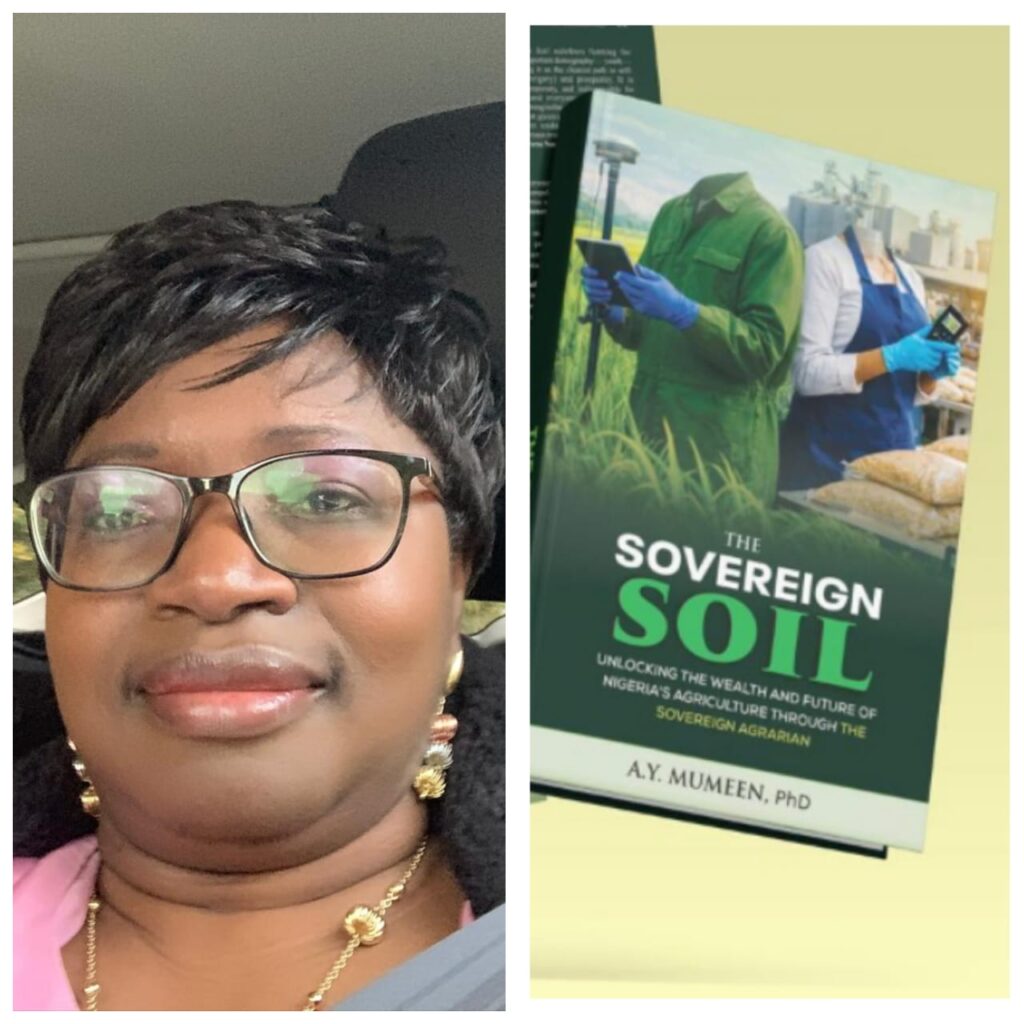
A United Kingdom-based legal practitioner, Victoria Oluwatoyin Opaleke, has described The Sovereign Soil: Unlocking the Wealth and Future of Nigeria’s Agriculture through the Sovereign Agrarian by Dr. A.Y. Mumeen as a powerful and timely contribution to Nigeria’s development discourse.
In a detailed review of the book, Opaleke praised the author for presenting agriculture in a practical, engaging, and inspiring manner capable of reshaping how Nigerians, particularly young people, perceive wealth creation and national growth.
According to her, the book goes beyond conventional discussions on farming and offers a fresh perspective on agriculture as a major driver of economic transformation, innovation, and entrepreneurship.
She noted that one of the most striking aspects of the book is its challenge to the long-held belief that university degrees automatically guarantee employment. In the opening chapter titled The White Collar Myth, the author examines the growing unemployment crisis among graduates while encouraging young Nigerians to explore agriculture and enterprise as viable alternatives for financial independence.
READ ALSO: Top Personalities Confirm Attendance for The Sovereign Soil Book Launch
Opaleke also commended the author for drawing attention to Nigeria’s enormous but underutilised agricultural potential. She described the book’s insights into the richness of the country’s savannah soils and crop diversity as eye-opening, stressing that Nigeria possesses vast natural resources that remain largely untapped.
She further highlighted Chapter Three, The Hidden Middle, where the author explores opportunities in value addition, food processing, storage, logistics, and market systems. According to her, the chapter demonstrates that success in agriculture is no longer limited to owning large farmlands, but increasingly depends on innovation, technology, and efficient systems.
The reviewer praised the book’s discussions on precision agriculture, digital tools, fintech integration, export compliance, and modern farming practices, describing them as highly relevant in today’s technology-driven global economy.
Drawing from her experience as a corporate legal practitioner, Opaleke emphasised the need for stronger policy and legislative support for the agricultural sector. She called for better alignment between agricultural policies and land-use laws, export regulations, environmental policies, research funding, and youth empowerment initiatives.
While applauding the overall quality of the publication, she suggested that future editions could place greater emphasis on the role of women in agriculture, particularly in areas such as land ownership, financing, and access to training opportunities.
Reflecting on the personal impact of the book, Opaleke revealed that it changed her perspective on career aspirations and national development.
She stated that if she had encountered such ideas earlier in life, she might have considered agricultural entrepreneurship instead of focusing solely on the traditional white-collar career path.
Describing the publication as more than just a book on agriculture, she referred to it as “a roadmap for national transformation” capable of repositioning agriculture as a prestigious, profitable, and technology-driven sector central to Nigeria’s future prosperity.
The review concluded with a call on policymakers, educators, parents, and young Nigerians to embrace the opportunities outlined in the book and take deliberate steps toward unlocking the nation’s agricultural potential.